AI Powered Portfolio Management for 2026 Investors in Action
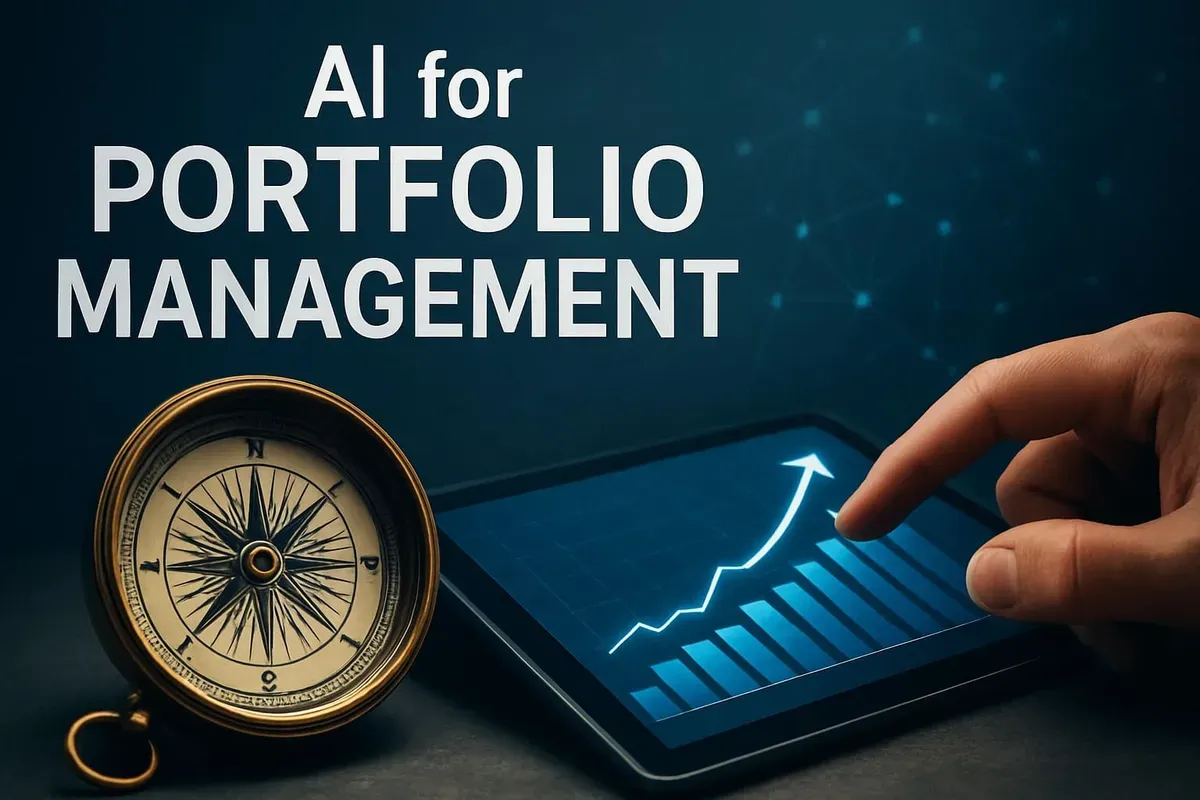
The ground beneath portfolio management is shifting at remarkable speed. As 2026 approaches, the traditional architecture of investing faces disruption from a powerful force: AI for portfolio management. Strategies once anchored in intuition and backward-looking data now compete with intelligent systems capable of processing real-time market signals, alternative datasets, and predictive analytics at scale. This transformation is far from incremental. Static allocation models are giving way to adaptive frameworks that learn, recalibrate, and execute with precision. What follows outlines seven defining shifts reshaping risk management, strategy design, and portfolio optimization in the next investment cycle.
The AI Advantage: Why 2026 Portfolio Management Will Never Be the Same
1. Capital Allocation Is Becoming Algorithmic
Portfolio management is being reshaped at its core. As 2026 approaches, AI for portfolio management is no longer supplementary, it dictates how capital is deployed, exposures are structured, and returns are targeted. Allocation decisions once confined to quarterly reviews now adjust continuously, ensuring portfolios remain aligned with dynamic market conditions.
2. Real-Time Intelligence Replaces Static Frameworks
The volume and velocity of modern market data, prices, macro indicators, earnings updates, satellite imagery, and social sentiment, overwhelm traditional models. AI-powered systems process this information instantly, allowing portfolios to respond in minutes rather than weeks. Decisions are faster, more precise, and free from human biases or delays.
3. AI Portfolio Insights and Risk Management
Integrating AI Portfolio Insights and Risk Management tools provides a competitive edge. These platforms uncover hidden correlations, nonlinear exposures, and second-order risks across asset classes. Forward-looking intelligence enhances scenario planning, stress testing, and risk mitigation, helping managers act before vulnerabilities escalate.
4. Extracting Signals From Alternative Data
Beyond speed, AI delivers depth. Algorithms extract actionable patterns from alternative datasets such as geospatial activity, supply chain updates, and social sentiment. Where traditional approaches relied on lagging indicators, AI identifies leading signals invisible at scale, creating opportunities for timely and informed decisions.
5. Prescriptive Execution and Continuous Rebalancing
AI moves portfolios from predictive insight to prescriptive action. Systems recommend, and sometimes execute, adjustments autonomously, rebalancing exposures during market shocks across regions and sectors. Risk recalibration is continuous, reducing response times and enhancing resilience.
6. Transparency and Governance
Explainability is essential. Investors, regulators, and boards require clarity on AI-driven decisions. Modern platforms now provide traceable logic and auditability, ensuring compliance while maintaining innovative edge.
7. AI as a Core Operating Engine
AI is no longer experimental, it is a foundational infrastructure. Embedded across strategy, risk, and optimization, it drives competitive advantage for firms that treat it as central, not peripheral, to portfolio management.
7 Ways AI for Portfolio Management Is Transforming 2026 Investing
The rules of engagement in portfolio management are unrecognizable from just a few years ago. What was once the realm of quarterly rebalancing and gut-driven bets is now a battleground where milliseconds, alternative data, and machine learning models dictate winners and losers. The surge in ai for portfolio management is not a slow evolution but a full-scale reinvention of the investment process. We are witnessing a tectonic shift: portfolios are being built, optimized, and protected by algorithms that see patterns invisible to the naked eye. As a result, returns, risk, and client expectations are moving targets, and only those who adapt will survive. Here are the seven defining ways ai for portfolio management is transforming the investment landscape for 2026.
1. Real-Time, Data-Driven Decision Making
Speed is the new alpha. Ai for portfolio management now ingests, analyzes, and interprets thousands of data points per second, from market feeds to macroeconomic indicators and even satellite imagery. This unprecedented velocity allows portfolio managers to make decisions in real time rather than relying on yesterday’s news or outdated models. Consider a scenario where volatility spikes in a foreign market. Traditional desks might take hours to react. With ai for portfolio management, algorithms flag these anomalies instantly and adjust allocations before human teams have even finished their morning coffee. This isn’t theoretical — institutional platforms today process over 10,000 data points per second, transforming risk management into a proactive discipline. The real benefit is not just speed, but objectivity. Decisions grounded in ai for portfolio management are free from panic or herd mentality. The result: portfolios that are more agile, less exposed to tail risk, and better equipped to capture fleeting opportunities.
2. Hyper-Personalization of Investment Strategies
Personalization used to be a luxury reserved for ultra-high-net-worth clients. In 2026, ai for portfolio management democratizes this capability, calibrating portfolios to the unique risk tolerances, goals, and constraints of every client, not just the select few. Algorithms dynamically adjust allocations as client situations or market regimes shift. Imagine a robo-advisor leveraging ai for portfolio management to construct bespoke ETF blends for tens of thousands of investors, each one tuned to individual preferences and tax considerations. The scale is unprecedented, yet the execution is seamless. Data doesn’t lie: personalized portfolios managed by ai for portfolio management have outperformed benchmarks by 1.5 percent annually, according to recent studies. For wealth managers and retail investors alike, this shift means mass customization, differentiated outcomes, and a new baseline for client service.
3. Advanced Risk Assessment and Stress Testing
Risk is no longer a static calculation. Ai for portfolio management uncovers nonlinear exposures and second-order risks that traditional tools miss, especially in multi-asset portfolios spanning geographies and sectors. The sophistication of modern risk engines gives managers an edge in scenario planning and stress testing. Picture ai for portfolio management simulating a sudden inflation shock or geopolitical crisis. These models surface hidden correlations, allowing teams to mitigate vulnerabilities before they become existential threats. Firms using ai-based risk engines report 40 percent faster risk mitigation response times, a critical edge when markets turn. This new paradigm is about resilience and transparency. Investors and regulators alike now expect rigorous, real-time risk oversight, and ai for portfolio management delivers, raising the bar for compliance and confidence across the industry.
4. Predictive Analytics for Alpha Generation
The days of intuition-driven outperformance are numbered. Ai for portfolio management leverages machine learning to detect subtle signals and patterns that precede asset price moves, sector rotations, or regime changes. By sifting through both historical and live data, these models provide a statistical edge that is difficult for human managers to replicate. For instance, ai-driven funds have consistently outperformed their discretionary peers in the past year, attributing 2 to 4 percent excess returns to predictive analytics. Early adopters of ai for portfolio management are using these insights to anticipate shifts before consensus forms, solidifying their lead. Want to see how this works in practice? Explore predictive analytics in real estate for a sector-specific example of forecasting power in action. The bottom line: the new alpha is systematic, data-driven, and scalable.
5. Automated Portfolio Rebalancing and Optimization
Manual rebalancing is relic of the past. Ai for portfolio management platforms now monitor portfolios continuously, triggering trades based on pre-set rules or detected anomalies. Trades are timed to minimize slippage, and operational overhead drops as automation takes the reins. Leading asset managers report rebalancing portfolios multiple times daily, ensuring exposures remain tightly aligned with mandates. The impact is measurable: automated rebalancing has cut operational costs by 60 percent, freeing human capital for more strategic oversight. For those seeking to go deeper, advanced asset portfolio management offers insights into how ai for portfolio management tools are redefining rebalancing, optimization, and risk control at scale.
6. Enhanced ESG and Thematic Investing
Sustainability and impact are no longer afterthoughts. Ai for portfolio management parses unstructured data in real time — news, regulatory filings, even social media — to score companies on ESG and thematic criteria. This enables fast integration of values and risk factors into portfolio construction. Imagine ai for portfolio management flagging a supply chain controversy before it hits mainstream headlines. Managers can divest or engage proactively, reducing reputational risk and improving compliance. In fact, AI-powered ESG screens have reduced risk events by 30 percent, according to recent data. Thematic investing, too, benefits from this agility. Investors can now align portfolios with emerging trends, from climate tech to demographic shifts, as soon as new data surfaces, keeping strategies both relevant and resilient.
7. Democratization of Institutional-Grade Tools
The final transformation is perhaps the most profound. Ai for portfolio management lowers the barriers to sophisticated analytics, scenario modeling, and risk tools that were once the exclusive domain of institutional giants. Cloud-based platforms now put predictive analytics and optimization within reach of independent advisors and retail investors. Adoption is exploding: AI-driven platforms have tripled their user base among independent advisors since 2024. This democratization not only levels the playing field but also fuels innovation and competition, as new entrants challenge legacy fee models and service standards. In 2026, the question is no longer whether you can access best-in-class tools, but how effectively you deploy them. Ai for portfolio management has rewritten the rules, and the field is wide open for those willing to adapt.
The Road Ahead: Challenges, Best Practices, and What Investors Need to Know
AI for portfolio management is rewriting the investment playbook, yet it introduces as many challenges as opportunities. The efficiency and speed are undeniable, but pitfalls can erode value just as quickly. Data quality issues, model bias, and lack of interpretability are the tip of the iceberg for investors and asset managers adopting this technology. One glaring concern is the reliability of data feeding these algorithms. Garbage in, garbage out—faulty or incomplete data can lead to flawed decisions at scale. Robust data governance frameworks are now essential, not optional. Ongoing validation and recalibration of AI models must become routine, especially as market regimes shift. The urgency is clear: without these guardrails, ai for portfolio management can amplify systemic risk rather than mitigate it. Regulatory scrutiny is intensifying. As fiduciary standards rise, explainable AI is no longer a buzzword but a compliance mandate. Asset managers must be able to open the black box and justify every allocation or trade.
The AI in Asset Management Report 2025 highlights how industry leaders are balancing innovation with rigorous ethical oversight, setting a new bar for transparency. Operationally, the transition is rarely seamless. Integrating AI with legacy systems exposes technical debt. Talent shortages in data science and portfolio engineering slow adoption. Change management is an uphill climb, especially in firms with entrenched discretionary cultures. Best practices are emerging: combine machine-driven insights with seasoned human judgment, maintain rigorous backtesting, and always stress-test under adverse scenarios. It is not just about the tech stack or the models. Human-in-the-loop frameworks are proving vital.
Funds that blend ai for portfolio management with experienced PM oversight consistently outperform pure quant or fully discretionary shops. According to AI in Investment Management Regulation, continuous monitoring and adaptive governance are now industry imperatives. Looking ahead, the next generation of portfolio managers will need to master both algorithmic fluency and soft skills. Client expectations will evolve—demanding not just alpha, but explainability and operational resilience. In this landscape, ai for portfolio management is both the engine and the compass. Those who can harness it wisely will define the new frontier of outperformance.
Looking toward 2026, it’s clear that AI isn’t just tweaking the old rules of portfolio management, it’s rewriting them entirely. From real-time data-driven decisions to predictive analytics that spot alpha before the market blinks, NOI growth and risk profiles are shifting on a scale that would have seemed impossible even a few years ago. Platforms like Leni are empowering asset managers to navigate this transformation, surfacing actionable insights, monitoring risk, and keeping decisions aligned in real time. For those ready to move beyond spreadsheet guesswork, leveraging Leni’s AI capabilities provides a powerful way to sharpen the competitive edge.

Leni
Centralize performance signals, surface opportunities, and accelerate data-driven decisions across your multifamily portfolio today.
MEET LENI
Get Portfolio Insights With Leni Analytics
Dive into a live demonstration of Leni Analytics and discover how intuitive data visualization and real-time insights can transform your decision-making process.
Capabilities